

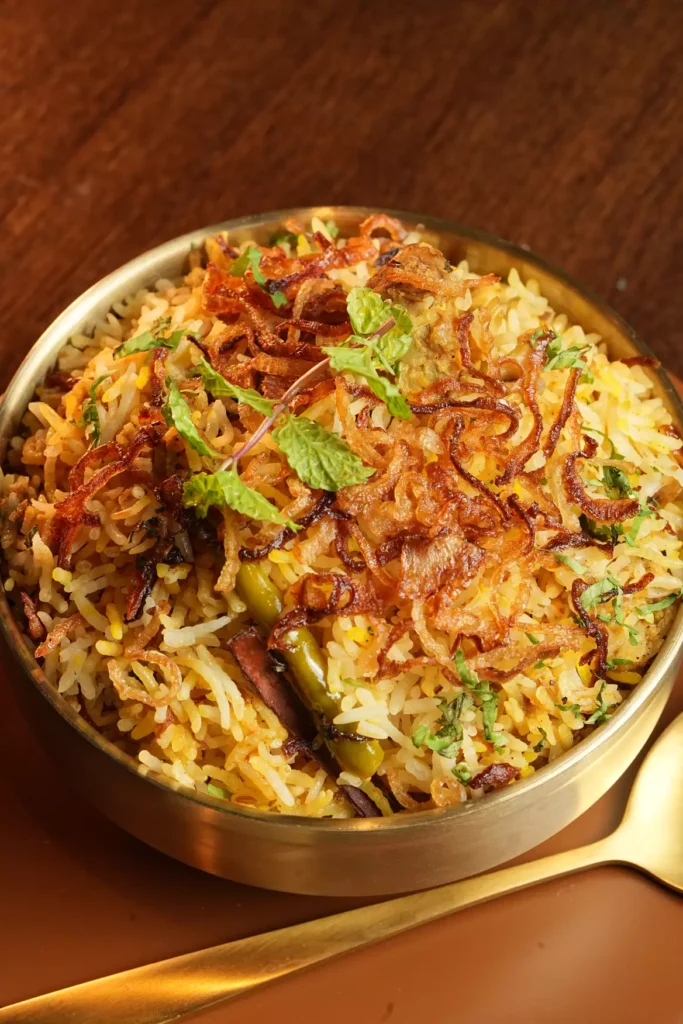
What Is Dum Cooking? The Secret Behind Biryani
Ever wondered why a great biryani tastes so different from rice simply cooked with spices? The answer is usually one word: dum. It’s one of Indian cooking’s most elegant techniques, and once you understand it, you’ll taste the difference in every dish that uses it. So what is dum cooking, exactly?
What Dum Cooking Means
“Dum” means slow-cooking food in a sealed pot over a low flame, so it cooks gently in its own steam and trapped aromas. The technique ties closely to “dum pukht,” the famous slow-cooking style of the royal kitchens of Awadh. The idea is simple but powerful: trap everything inside, and let time and gentle heat do the work.
How Dum Cooking Works
In dum cooking, the cook layers ingredients into a heavy pot — a handi — and then seals it, traditionally with a ring of dough pressed around the lid. This seal is the whole secret. As the food heats, steam builds inside and cannot escape. Instead of evaporating, the seal forces all the moisture, aroma, and flavour back into the food, again and again.
The pot then sits over a very low flame. Sometimes the cook places hot coals on the lid, so heat surrounds it from all sides. Nothing is stirred, and nothing is rushed. The food essentially cooks itself in a sealed, fragrant chamber.
Why Dum Cooking Tastes Better
The result is hard to replicate any other way. Because nothing escapes, flavours concentrate and meld. Meat turns meltingly tender as it slowly cooks in trapped moisture. Spices infuse evenly throughout. As a result, rice in a biryani absorbs the aromas rising from the meat and masala below, so every grain carries the flavour of the whole dish.
Finally, when you open a sealed dum biryani at the table, that first rush of fragrant steam announces the entire technique. It’s flavour that was locked in, released all at once.
Dum Cooking Beyond Biryani
While biryani is the most famous example, cooks use dum across Indian cooking for slow-cooked meats, rich gravies, and dishes where depth and tenderness are the goal. So anywhere you want concentrated flavour and meltingly soft texture, dum delivers. In fact, dum pukht itself is a celebrated part of India’s Awadhi culinary heritage.
Dum Cooking, Done Right in Indore
The catch with dum is that you can’t hurry it. It demands patience, the right pot, and proper technique exactly the things that get skipped when a dish is rushed. However, done properly, the difference is unmistakable. At Masala Code, on AB Road opposite C21 Mall, dum cooking is part of how we honour dishes like our regional biryanis. We treat each one with the slow, sealed care the technique was built for.
So the next time you lift the lid on a real dum biryani and that wave of steam hits you, you’ll know exactly what’s happening and why it tastes the way it does. Read more about the best biryani in Indore, explore our menu, or book a table and experience dum cooking for yourself.