

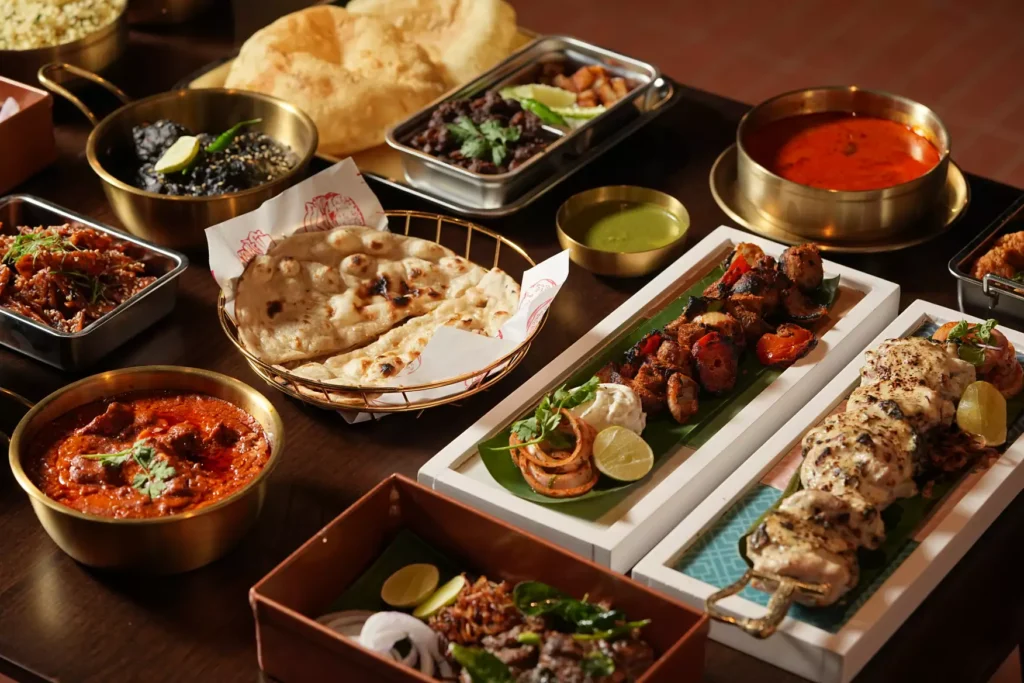
The 28 States on One Menu: A Beginner's Guide to Regional Indian Cuisine
India isn’t one cuisine. It’s twenty-nine.
Most of us grew up thinking “Indian food” meant butter chicken, naan, and a few familiar curries. But that’s a tiny window into a country where the food changes every few hundred kilometres — sometimes every few villages. Cross a state border in India and the oil changes, the spice changes, the staple grain changes, even the way a dish is named changes.
At Masala Code, this idea is the whole reason we exist. We set out to put the diversity of India’s kitchens on one menu — so you could travel the country without leaving your table in Indore. Here’s a beginner’s guide to how regional Indian cuisine actually works.
The North — Tandoor, Wheat, and Dairy
Punjab, Delhi, and the northern belt gave the world the dishes most people recognise — tandoori meats, rich dals, paneer, and breads cooked in a clay oven. This is wheat country, so rotis and naans dominate over rice. Dairy is everywhere: ghee, cream, paneer, yoghurt. The flavours are warm and robust, built on onion-tomato-garlic bases and garam masala.
The South — Rice, Coconut, and Fermentation
Travel south and everything shifts. Rice replaces wheat. Coconut replaces cream. Tamarind brings sourness, curry leaves and mustard seeds bring aroma, and fermentation gives you dosa, idli, and appam. Tamil Nadu’s Chettinad cooking is fiery and peppery; Kerala leans on coconut and seafood; Andhra is famously the spiciest region in the country.
The East — Mustard, Fish, and Subtlety
Bengal and the eastern states cook with mustard oil and a delicate hand. Fish is central — Bengali shorshe ilish (hilsa in mustard) is a cultural institution. Odisha gave India some of its oldest temple food traditions, and the region’s desserts, like chhena poda, are unlike anything in the west or south.
The West — Sweet, Sour, and Coastal
Gujarat balances sweet and savoury in the same bite, with vegetarian thalis that can run to dozens of small dishes. Maharashtra brings street-food genius. And down the Konkan coast, Goa folds Portuguese influence into Indian soul — vindaloo, sorpotel, and seafood cooked with kokum and coconut.
The Northeast — Smoke, Ferment, and Restraint
Often left off Indian menus entirely, the Northeast — Assam, Nagaland, and beyond — cooks with smoke, fermented ingredients, and minimal oil. It’s earthy, clean, and increasingly celebrated by chefs worldwide for exactly those qualities.
Why Regional Indian Cuisine Belongs on One Menu
Because no single trip, and no single restaurant, usually lets you taste all of this. We built our menu as a culinary map of India — a Chettinad pepper chicken sitting beside a Lucknowi kebab, a Bengali fish curry a few pages from a Goan vindaloo. Each one is cooked with respect for how it’s actually made in its home region, not flattened into one generic gravy.
If you’ve only ever eaten “Indian food,” regional Indian cuisine is the door to a much bigger country. Explore our menu, or book a table and let us take you on the tour. Start with the best biryani in Indore if you want an easy first stop — then keep going.