

Where the jungle meets the plate, and tradition whispers through every flame.
The Origins:
Jharkhand wasn’t born in palaces or courts — it was born under sal trees, in tribal homes where every ingredient had to be foraged, hunted, or grown. Here, Sarna tribes & Santhal communities didn’t just survive — they flourished through food rooted in rhythm, ritual, and respect for nature.
Before there were menus, there were seasonal instincts.
Before there were chefs, there were grandmothers with mahua wine and hand-pounded chutneys.
The Signature Dishes:
Thekua: Sweet, deep-fried wheat flour cookie — festive, earthy, and powerful.
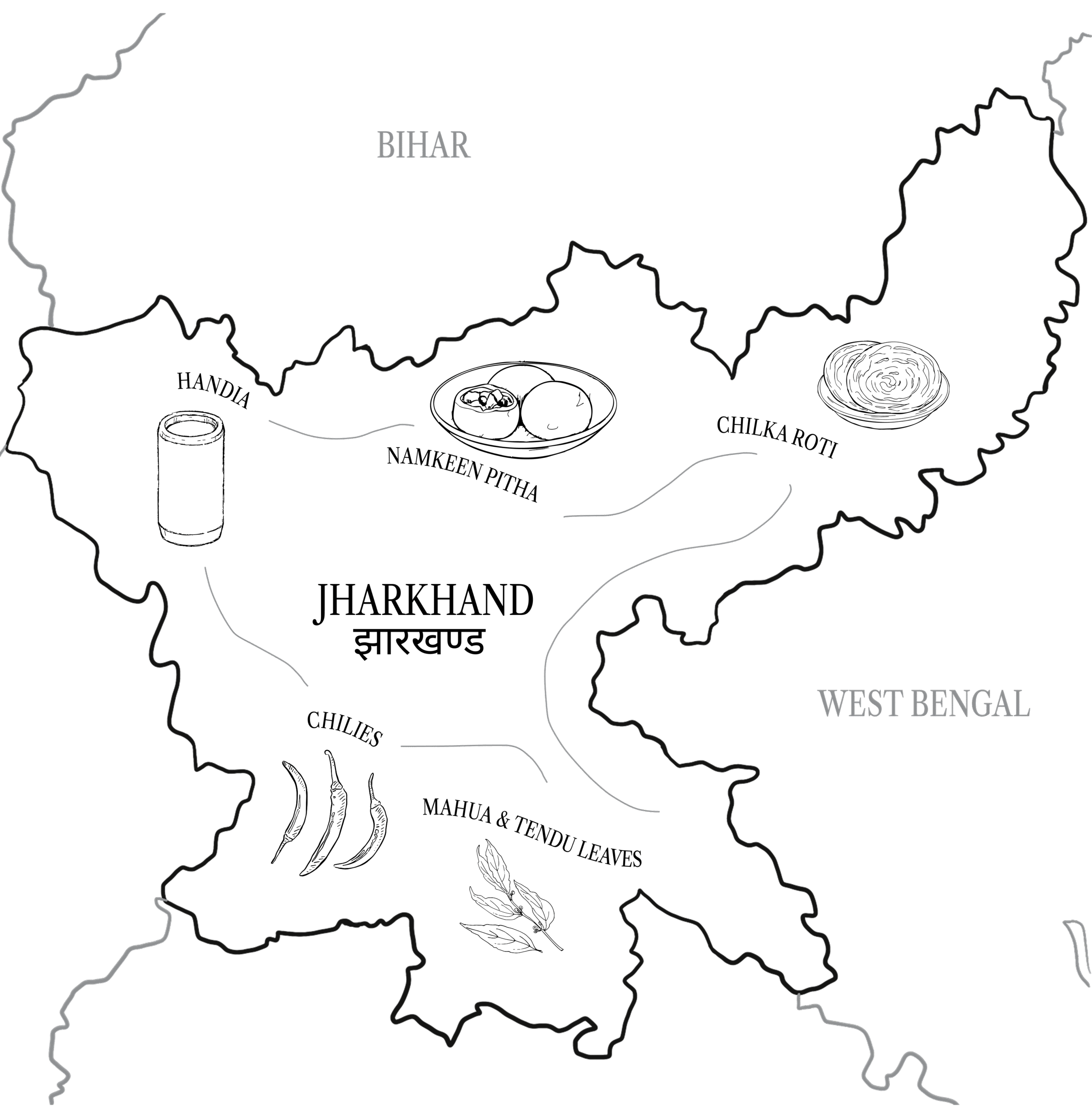
Chilka Roti: Rice-lentil pancakes — humble, nourishing, ancient.
Handia: Fermented rice beer — brewed with forest herbs, drunk with laughter and songs.
Sanai ki Sabzi: Made from wild sanai flowers — bitter, bold, and medicinal.
Rugra (Jungle Mushroom): The king of monsoon — chewy, nutty, and wild.
Bamboo Shoots & Mahua Flowers: Cooked with respect — never rushed.
Kodo Millet Khichdi: The ancient grain bowl — rich in nutrients and soul.
The Culture It Forged:
In Jharkhand, food is survival, but also celebration. A wedding means mahua and mutton. A harvest means rice beer and bamboo curry. Even their grief has a ritual thali — raw, simple, honest.
Here, meat isn’t luxury. Plants aren’t decoration. Everything on the plate either healed the body, strengthened the community, or fed the spirit.
The Shift Over Time:
Urban India is only now discovering what Jharkhand always knew — that foraging is science, and local is luxury. From jungle mushrooms in 5-star hotels to millet bowls in cafes — the tribal wisdom is trending. But at its core, it remains untouched — cooked slow, eaten together, and rooted in silence.