

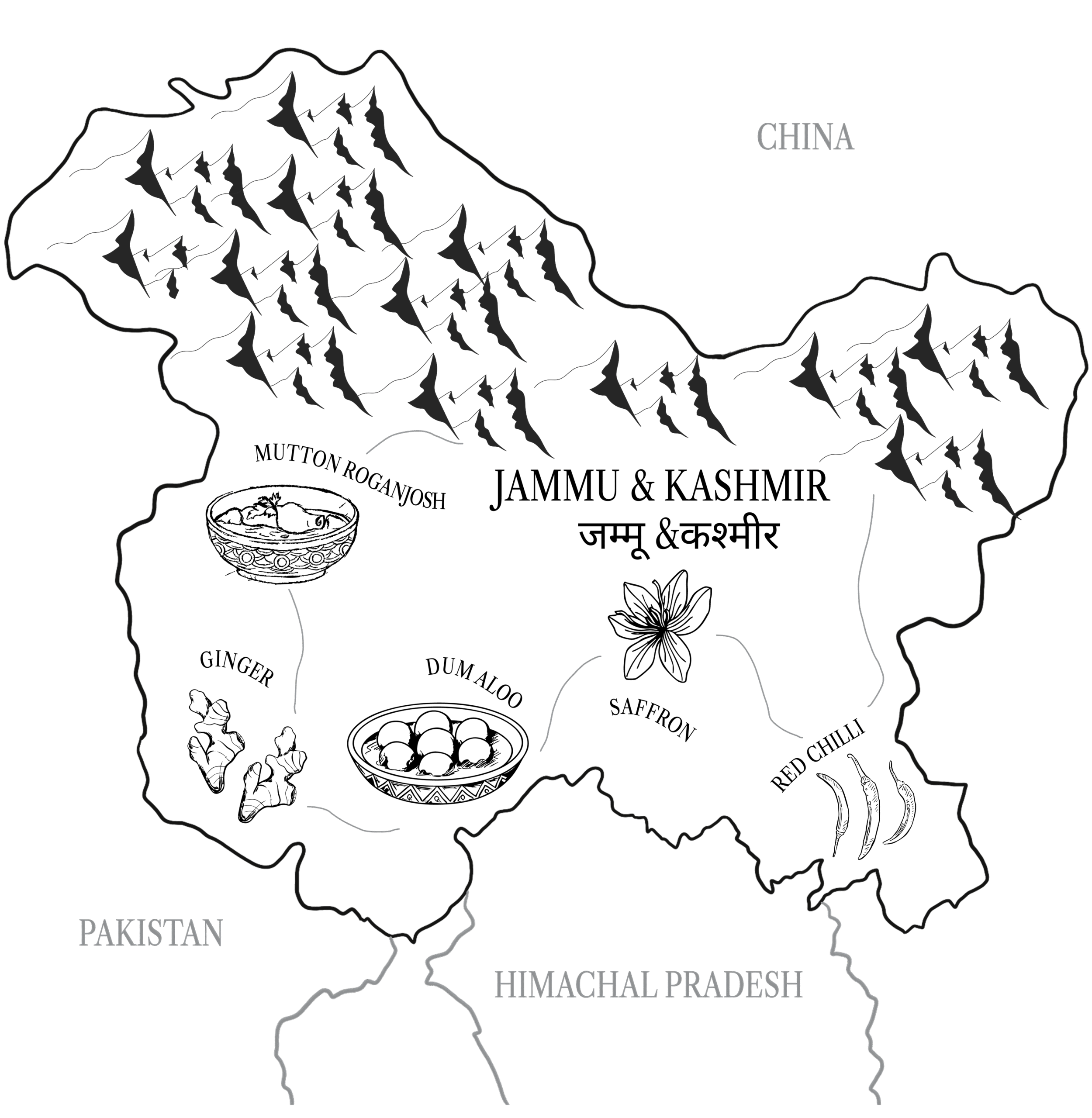
The Beginning:
Kashmir’s cuisine has Persian, Afghan, Central Asian, and Mughal influences — yet it’s completely its own: unapologetically fragrant, slow-cooked, and crafted with ritualistic respect.
Meanwhile, Jammu brings a contrast — Dogra-style, sattvic, and grain-rooted. Together, they shape a region that offers fire and calm, opulence and simplicity, in one thali.
The Classics of Kashmir:
Rogan Josh: The poetry of lamb, slow-simmered with Kashmiri dry ginger, fennel, and ratanjot.
Gushtaba: Soft meatballs in yogurt gravy — known as the ‘dish of kings’.
Yakhni: A subtle yogurt-based mutton curry, no red chilli, just grace.
Modur Pulav: Sweet Kashmiri rice with dry fruits and saffron — a literal festival on a plate.
Kahwa: Not a beverage, but a mood — green tea with cardamom, almonds, and a winter’s soul.
Haak Saag: Simple yet soulful — a green leafy dish that defines daily Kashmiri kitchens.
And From Jammu:
Rajma-Chawal (Dogri style): With that dark, smoky masala no other region gets right.
Ambal (Pumpkin curry): A tangy-sweet dish that pairs with poori and traditions.
Kaladi Cheese: Indigenous hill cheese pan-fried to crisp perfection.
The Culture It Created:
Food in Kashmir is ceremonial. Especially Wazwan — a 36-course meal of meat, rice, gravies, and soul. Cooked overnight by wazas (master chefs), it’s not just a meal — it’s a procession of love and legacy. Guests share large copper plates, sitting together — because food is always community.
And Kahwa? It isn’t offered. It’s presented. With a samovar. With silence. With respect.
How It’s Evolved:
While cafés bloom across Srinagar and Jammu brings fusion to the fore — the spirit stays frozen in time, like Dal Lake. People here still cook for hours. Still believe saffron is sacred. Still treat food like inheritance.