

Born from the hills, fed by forests, and seasoned with silence. Where It Began:
Life in the Kumaon and Garhwal regions has always been shaped by altitude and austerity. In such tough terrains, the cuisine evolved around locally grown millets, lentils, wild greens, and minimal spices. Every bite is nutrient-rich, earthy, and unpretentious. It’s not performance. It’s presence.
The Classics That Define It:
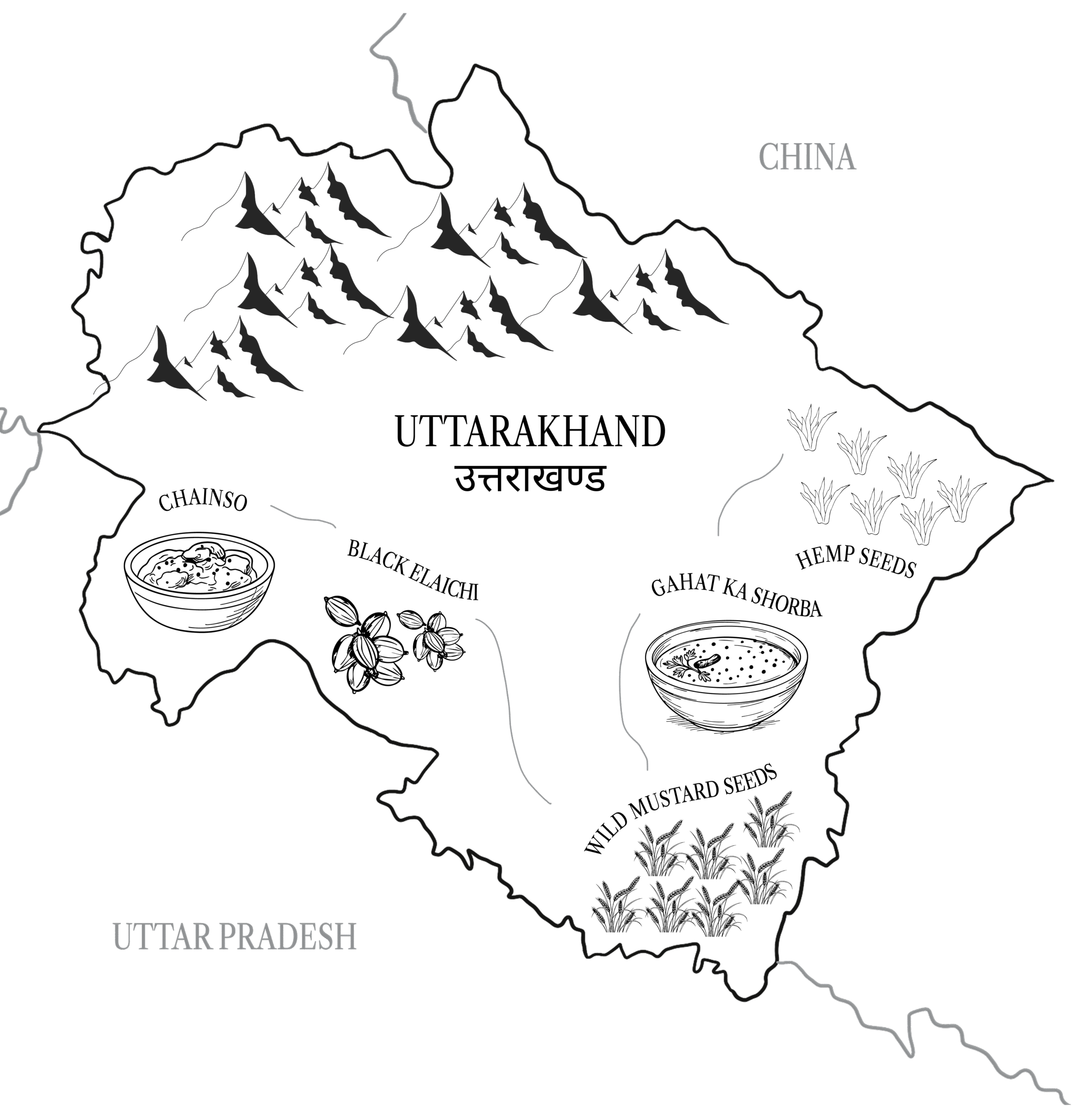
Chainsoo: A rustic black gram curry — roasted and ground for boldness, slow-cooked for soul.
Kafuli: A leafy green curry made of spinach and fenugreek — the pahadi hug in a bowl.
Jhangora Ki Kheer: Made from barnyard millet — subtle, sweet, sacred.
Bhang Ki Chutney: Made from hemp seeds — tangy, nutty, absolutely iconic.
Aloo Ke Gutke: Spiced pahadi potatoes sautéed with jakhiya (wild mustard) — crisp, local, addictive.
Rus (or Rasa): A thin soup of mixed pulses — comforting, warm, and deeply traditional.
The Culture It Created:
Uttarakhand’s food tells a story of honesty. No cream. No deep fry. No chaos.Just simple techniques passed from mothers to daughters — Cooked on chulhas, eaten on floors, and celebrated in silence.
Meals here aren’t about indulgence. They’re about balance, purity,
and gratitude.
The Evolution Over Time:
Urban Uttarakhand now explores fusions and cafés — but locals are returning to ragi rotis, mandua (finger millet), and seasonal eating.
Even tourists now crave the “village thalis” —because wellness isn’t a trend here. It’s always been a lifestyle.