

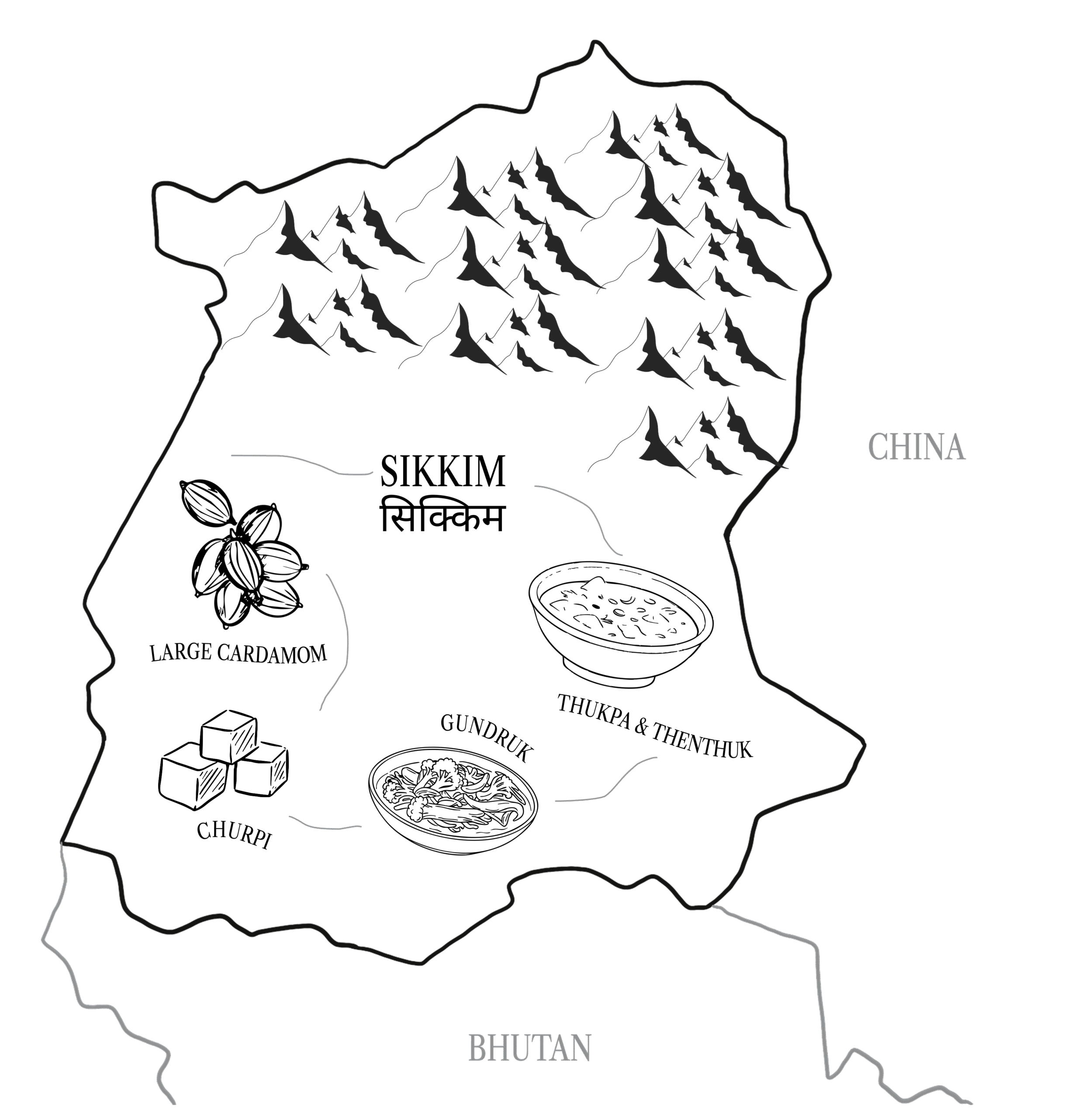
Where dumplings whisper folklore, and every broth tells a tale of survival and serenity.
The Origins:
Tucked between Nepal, Tibet, and Bhutan, Sikkim has always been a cultural crossroad. Its food is shaped by altitude, agriculture, and ancestry. No rich gravies, no excess oil — just fermented, foraged, and fire-boiled soul food. Before luxury touched plates, Sikkim’s tribes knew how to create warmth through food — using barley, buckwheat, bamboo, and blessings.
Signature Dishes:
Momo: Not just dumplings — but comfort sealed in thin dough, steamed with patience and stories.
Thukpa: A soulful noodle soup — warm like a hug on a snowy evening.
Phagshapa: Pork with radish and dried chilies — the bold, tangy echo of Tibetan roots.
Gundruk: Fermented leafy greens — Nepalese heritage preserved in every bite.
Chhurpi Soup: Made with hardened yak cheese — chewy, smoky, meditative.
Kinema Curry: Fermented soybeans — pungent, protein-rich, and pure mountain umami.
The Culture It Birthed:
In Sikkim, eating is sacred. You eat with your hands, you eat on the floor, and you eat with silence. Food here isn’t just nourishment — it’s a balancing act between the body and the mountains. It respects the land. It doesn’t waste. It doesn’t boast. Even the fermentation is slow — the kind of patience the world has forgotten.
The Shift with Time:
Sikkim, now an organic powerhouse, is showing the world what zero-waste and sustainable dining looks like. From organic markets to eco-conscious cafés, its food scene is catching global eyes — yet rooted in tradition.