

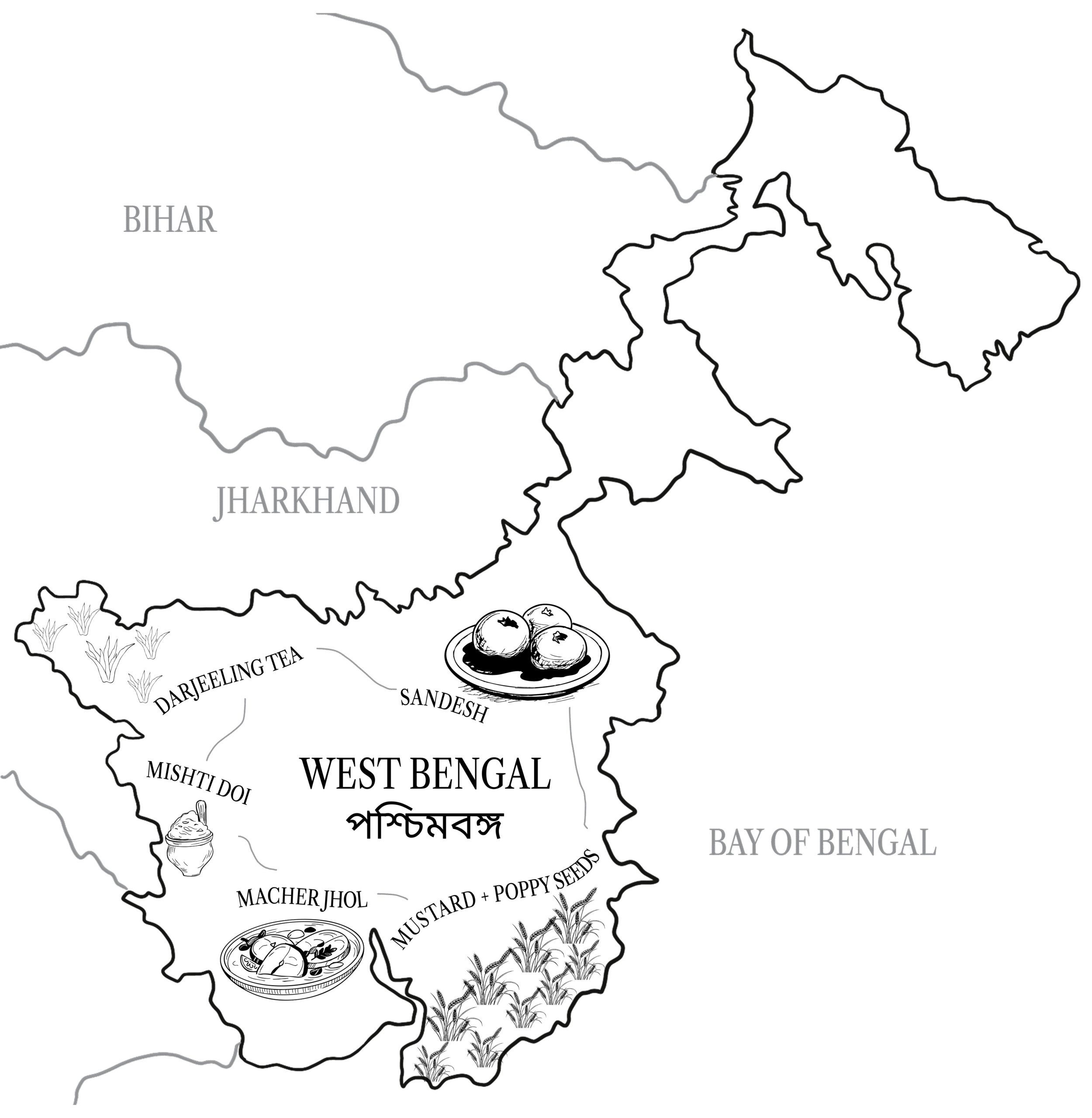
Where every meal is a sonnet, and every spice has a soul. The Origins: Bengal’s cuisine is a product of history, heartbreaks, and high art. From the Nawabs of Murshidabad to the famine-struck streets of Kolkata, from colonial breakfasts to Durga Puja bhogs — Bengal has always treated food as language. Be it a fish curry or a sandesh, it’s never about the recipe — it’s about emotion.
The Iconic Dishes:
Shorshe Ilish: Hilsa fish bathed in mustard — the queen of rivers, the pride of households.
Begun Bharta: Charred brinjal mashed with mustard oil and onions — smoky, bold, honest.
Chingri Malai Curry: Prawns in coconut milk — luxurious, soft-spoken royalty.
Luchi & Aloo Dum: Puffy fried bread with spicy potatoes — morning rituals with maa.
Kosha Mangsho: Slow-cooked mutton — rich, dramatic, unapologetically Bengali.
Mishti Doi: Sweet curd, the dessert that ends every chapter.
Rosogolla & Sandesh: Sweetness sculpted like emotion.
The Culture It Shaped:
In Bengal, you don’t just eat, you converse with food. Meals are debated, ingredients are discussed like literature, and memories are built around dining tables. It’s the only place where a poet, a painter, and a fisherman might all argue over the correct way to cook mochar ghonto. And don’t forget Adda — the legendary Bengali round-table discussions over tea, telebhaja, and time. The Evolution: From narrow alleys of North Kolkata to Soho cafés in London, Bengali food has globalised without losing its intimacy. Fusion? Yes. But the heart still beats in mustard oil. The new-gen bongs may grill their Ilish and Instagram their mishti, but when they’re homesick — they crave maa ke haath ka maacher jhol.