

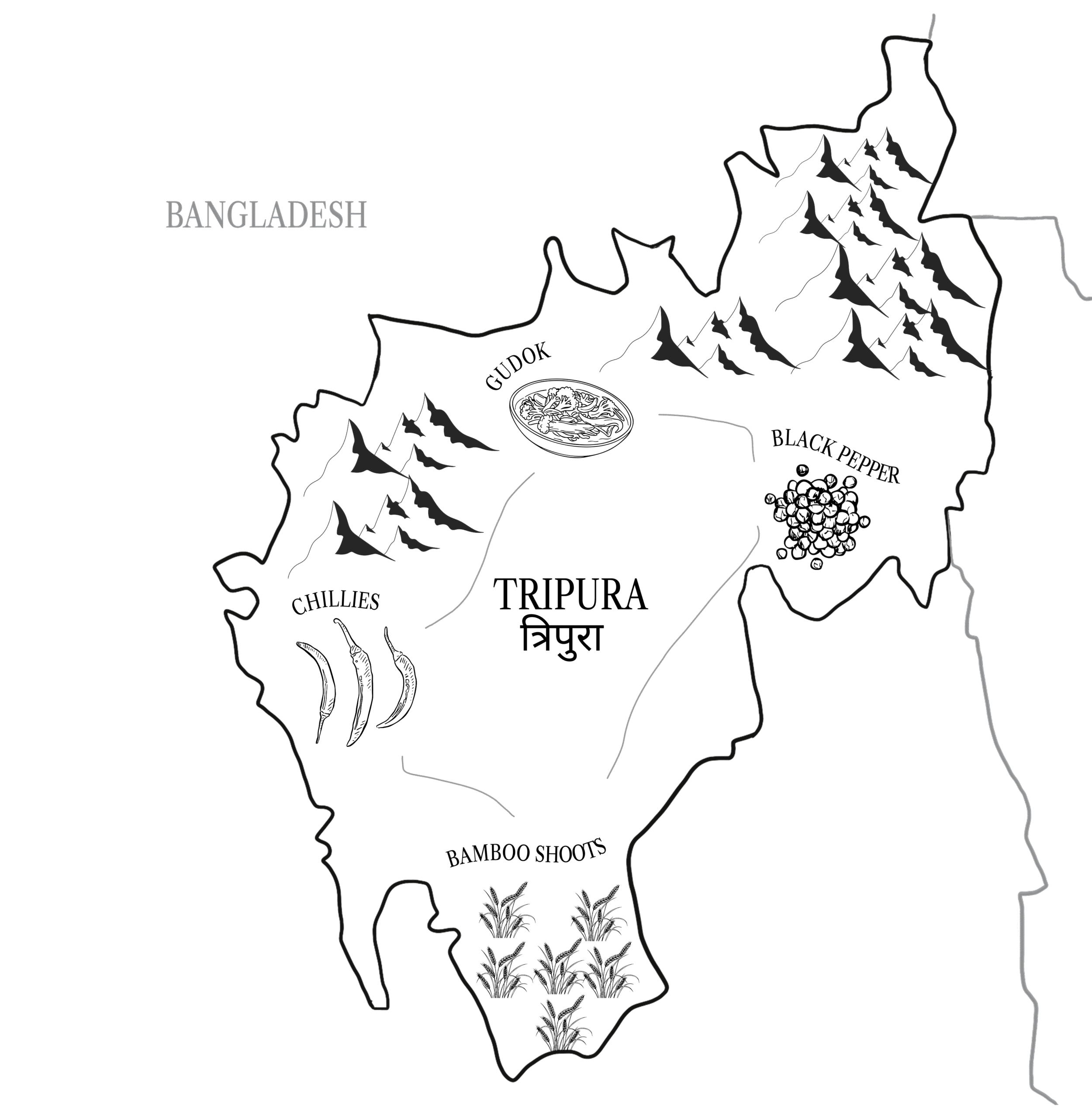
A cuisine untouched, unhurried, and unapologetically wild.
The Origins:
Tripura’s food is deeply rooted in the customs of the Tripuri tribes, crafted long before modern borders arrived. Minimalism isn’t a style here — it’s a philosophy. Less oil, no masalas, but flavours so pure — they’ll haunt your memory like an old lullaby. Backed by forests, rivers, and bamboo groves, the food culture is one of respect — not just for ingredients, but for life.
Signature Dishes:
Mui Borok: The soul of Tripuri cuisine — mostly based on fermented dry fish called berma, cooked with vegetables.
Berma Chutney: Sharp, bold, fermented — a wild card that becomes your addiction.
Wahan Mosdeng: Pork with roasted chilies and ginger — smoky, spicy, and grounded.
Bamboo Shoot Curry: Simple yet earthy — bamboo isn’t just an ingredient here, it’s a way of life.
Gudok: A slow-cooked tribal delicacy made with bamboo shoots, berma, veggies — a dish born in bonfires.
Mosdeng Serma: Fish or meat pounded with chili and raw herbs — a mash that hits like a tribal poem.
The Culture It Wove:
Here, food is not celebrated loudly — it’s respected in silence. No wedding buffet noise, no Instagrammable garnish — just real food that tells you stories of rivers crossed, forests foraged, and hearts kept warm with fermented fish and wild greens. Women are the chefs. Men are the hunters. Bamboo is the stove. And the recipe? Passed from grandma’s hand to memory — never written, only remembered.
The Shift Over Time:
Tripura is still discovering the outer world, and the outer world is just beginning to peek into its hidden treasures. Chefs from Delhi to Mumbai are now slowly turning to Berma as an umami icon. But the soul of the food remains untouched — rural, resilient, and rooted.