

Where tribal wisdom meets forest flavour and soul-stirring simplicity.
The Beginnings:
Known as the “Rice Bowl of India,” Chhattisgarh’s culinary story is ancient, tribal, and deeply rooted in its forests, fields, and festivals. Long before cities rose, Adivasi communities lived in sync with nature — growing, gathering, and cooking with instinct. Here, every grain, root, and herb has a purpose — survival, healing, and celebration.
The First Flames:
Chana Samosa: Spicier, chunkier, and full of desi attitude.
Faraa: Steamed rice dumplings — soft, subtle, and nostalgic.
Angakar Roti: A rice roti smoked over fire — rustic and rich.
Chusela: Another rice-based flatbread that melts in warmth.
Bafauri: A guilt-free snack made of spiced lentils — steamed, not fried.
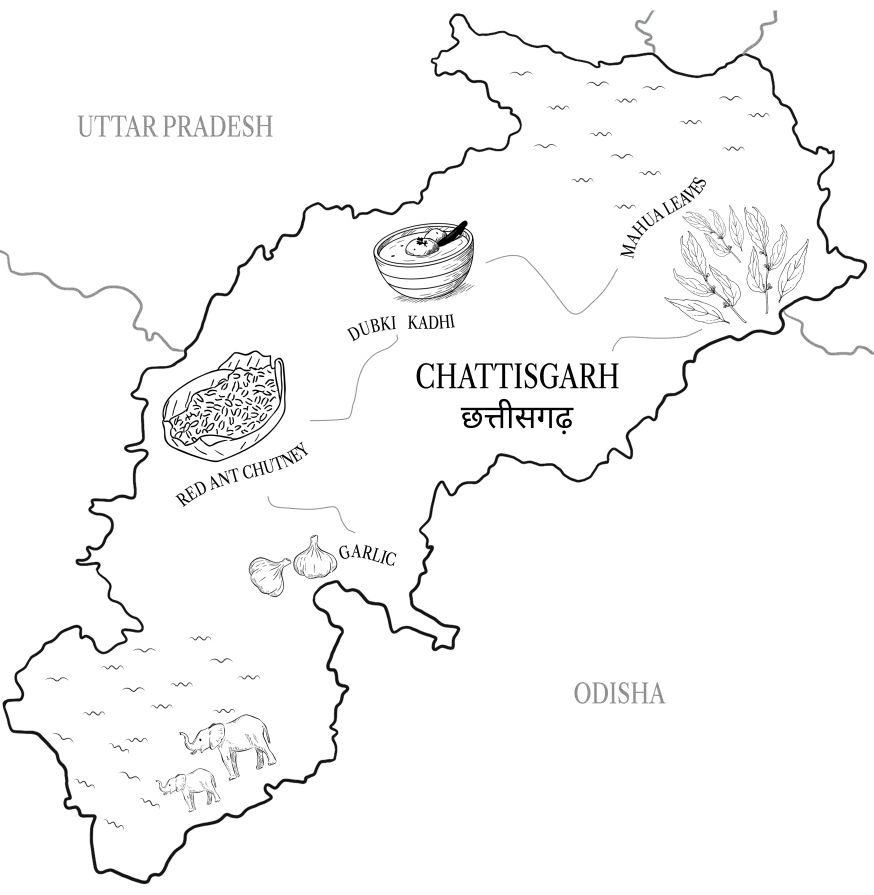
Dubki Kadhi: Tangy yogurt-based curry with soft besan dumplings — light but deep.
Mahua Dishes: From liquor to laddoos — the Mahua flower isn’t just food, it’s culture.
Shaping the Culture:
Food in Chhattisgarh isn’t just cooked. It’s foraged, fermented, and felt. From bamboo shoot curries to red ant chutneys, it celebrates wild ingredients with ancient wisdom. Even rice isn’t just rice — there are over 20 traditional varieties, each with its own story and season. And during festivals like Hareli or Pola, food becomes ritual — an offering to nature, ancestors, and community.
Over Time:
While the metros ignored Chhattisgarh’s table, its food held strong — protected in grandmothers’ memories, village kitchens, and tribal forests. Now, slowly, chefs and storytellers are turning to this untapped treasure trove — rediscovering the nutritional brilliance, the local pride, and the emotional comfort that this cuisine holds.