

The Origin:
Tucked amidst deodars and snow-kissed rooftops, Himachal’s food culture grew from solitude and survival. Up here, every ingredient mattered — stored, smoked, or sun-dried with care. The terrain demanded patience. The cold demanded warmth from within. That’s how this cuisine bloomed — not in speed, but in soul.
The First Flames:
Chana Madra: Yogurt-based chickpea curry slow-cooked with spices — a staple in every Himachali Dham.
Tudkiya Bhaat: The comfort of rice, lentils, and potatoes simmered with curd and ghee — a one-pot lullaby.
Babru: Himachali version of kachori, stuffed with black gram paste — crispy outside, soft within.
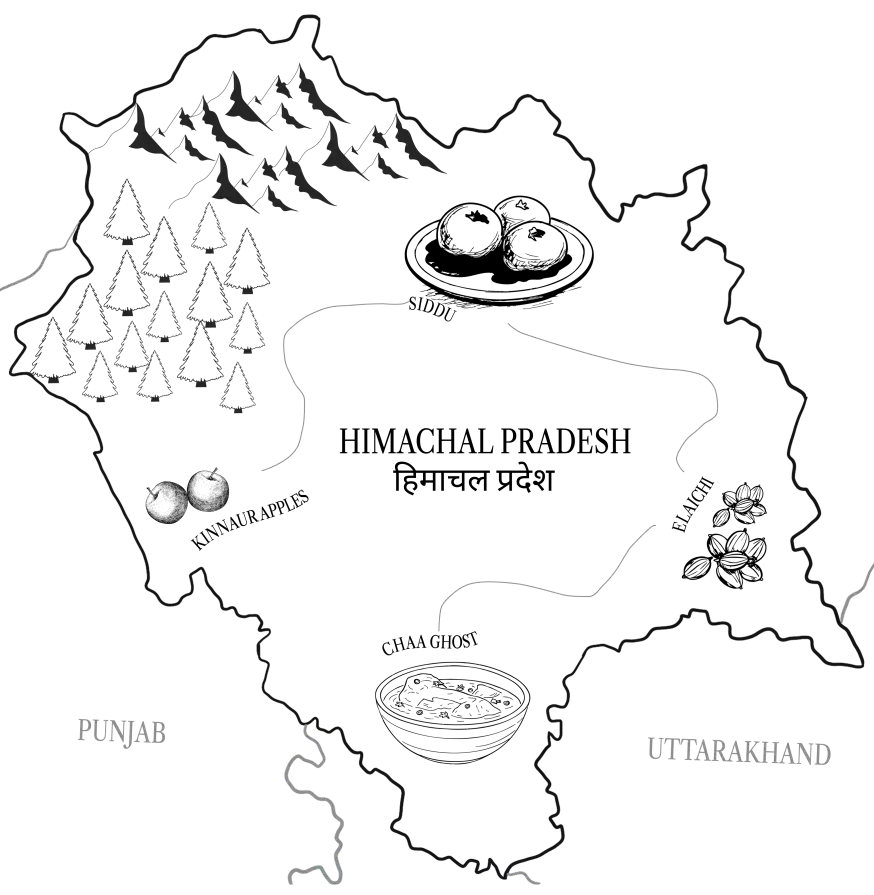
Siddu: Steamed wheat dough filled with walnut or poppy seed paste — earthy, delicate, divine.
Kullu Trout: Fresh river trout marinated with local herbs and grilled — a nod to the crystal rivers of Kullu.
Bhey (Lotus Stem): Cooked in spices and gram flour — a crunchy winter delicacy.
The Culture It Shaped:
Himachal’s food isn’t flashy. It’s sincere. Rooted. Ritualistic. The tradition of Dham — a festive community meal — reflects equality and celebration. Cooked by Botis (hereditary chefs), Dham is spiritual, not just social. You sit on the floor. Eat in courses. Share without hierarchy. It’s food that brings stillness in a world always rushing.
How It Evolved:
Modern Himachal now hosts cafés and bakeries run by young dreamers. Yet, at its core, the pahadi palate remains loyal to:
• Seasonal eating.
• Firewood cooking.
• Food as healing.
Snowfall, solitude, and silence all find their way into the plate — subtle, honest, and unforgettable.